

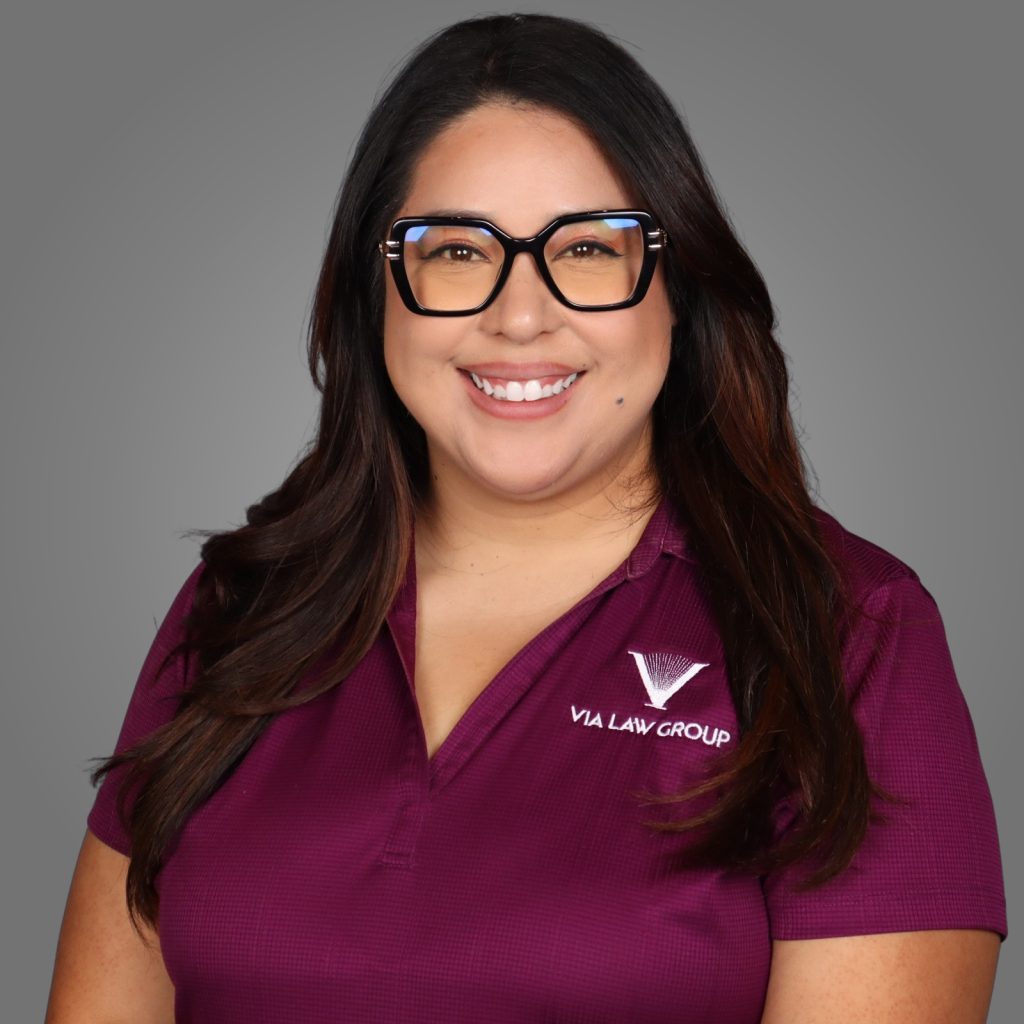
Every board member brings a unique perspective to Arizona List. Immigration attorney and board member Juliana Manzanarez shares how her journey shaped her commitment to justice, advocacy, and reproductive freedom.
From Accident to Advocacy
I didn’t set out to become an immigration attorney. I’d say it happened almost by accident when I saw firsthand the unfairness of a system that targets the most vulnerable.
Immigrants often face life-altering consequences for situations many U.S. citizens never have to think twice about, such as a traffic stop or a minor brush with the law.
Helping the most vulnerable isn’t by chance either. It’s part of my immigrant family’s fabric. No. I didn’t grow up translating at my parents’ doctor appointments or at the bank. They both have advanced college degrees despite all odds as Mexican immigrants who first arrived here poor and not knowing a word of English.
But their struggle taught the importance of seeking help, access to power which then leads to getting the right mentors, the scholarships, the after-school tutoring and right cheerleaders.
That profound lesson shaped the way I built my own practice. As the founder of Via Law Group, my approach centers on honesty, clarity, walking clients through every option, every risk and every right they have so they can make informed decisions for their families.
Where Immigration and Reproductive Justice Meet
I see the connection between immigration and reproductive justice as structural not incidental. Regardless of immigration status, people must be informed to make decisions about their own bodies and their own health. But I’m not kidding myself either. Policy after policy makes it harder for immigrant families to do just that.
Among the barriers I’ve seen is lack of access to private and public health insurance, which limits access to essential care. I’ve seen fear to seek care including birth control and abortion. Even a routine medical visit is risky for them.
The stakes aren’t abstract. I’ve seen it and experienced it. In 2019, I represented a mother caught up in the largest single-day workplace immigration raid in U.S. history, when 680 people were detained across seven Mississippi food processing plants in a matter of hours. She was still breastfeeding her 4-month-old daughter when she was taken and moved to a facility nearly 200 miles from home. I distinctly recall that her only concern was her baby’s food.
That has stayed with me and it isn’t an isolated case. Immigrant women, many of them reportedly pregnant, suffering from postpartum or even nursing are in custody facing delayed medical care, shackling and separation from newborns and young children.
A reproductive justice movement that doesn’t account for immigration status will always leave people behind. If we’re fighting for the right to make decisions about our own bodies, that fight must include people who are afraid to walk into a clinic, a hospital, a police station or a courtroom.
Building a Stronger, Wider Arizona List
That fight is exactly why being on the board matters to me. It’s an integral extension of my work. It’s the same struggle. Immigration law is federal, but many of the conditions my clients face is shaped by state and local decisions.
In Arizona, a person can’t get a driver’s license without a Social Security number and they can’t get one without U.S. citizenship, residency or work authorization. That means a routine traffic stop can turn into an immigration stop. The same Social Security requirement can also lock people out of Medicaid, which can make reproductive and health care nearly impossible inside an immigration detention center as well as outside of it.
We in Arizona lived through SB 1070’s “show me your papers” era, the Arpaio’s sweeps and his racial profiling practices. Now we have Prop 314, a ballot referral brought by politicians and approved by voters that would make it a state crime to cross the border illegally. A provision currently enjoined in part while the courts sort it out, though other pieces of the law. These are local decisions by the people Arizona voters elect. Arizona List knows that and I want to be part of educating voters about the consequences of their vote.
I hope Arizona List continues growing beyond the rooms we are already in. As a board and organization, we must reach people who may not consider themselves politically active but who care deeply about these issues once they understand what’s at stake.
I’d also like to see more materials and events made available for non-English speakers because even someone who can’t vote usually knows someone who does.
As I like to say, policy doesn’t land on paper. It always lands on people.